Keita Miyazaki – Grand Palais, Paris, France - A Symbiotic Form, 2026 - Site-Specific Public Sculpture
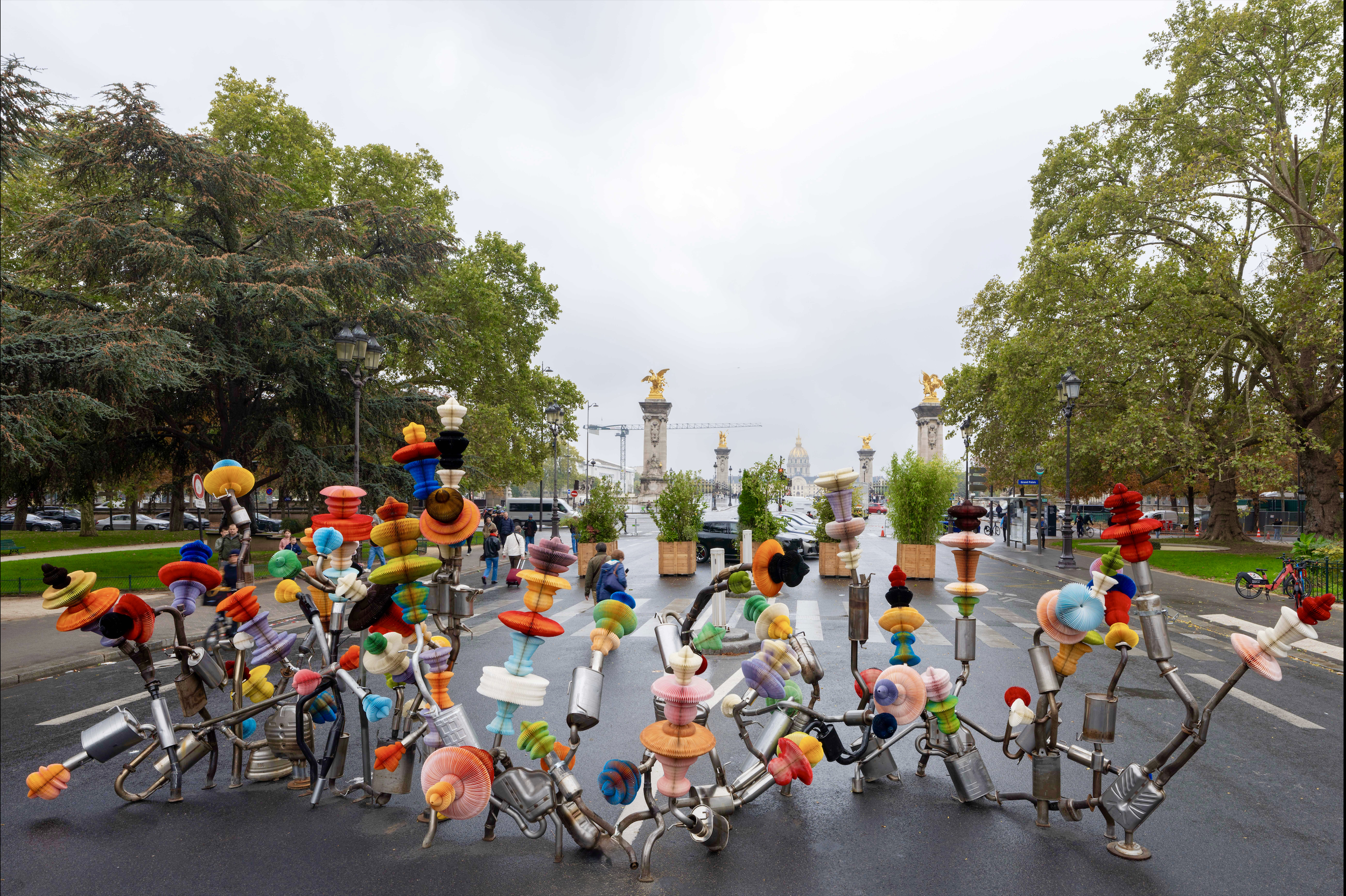
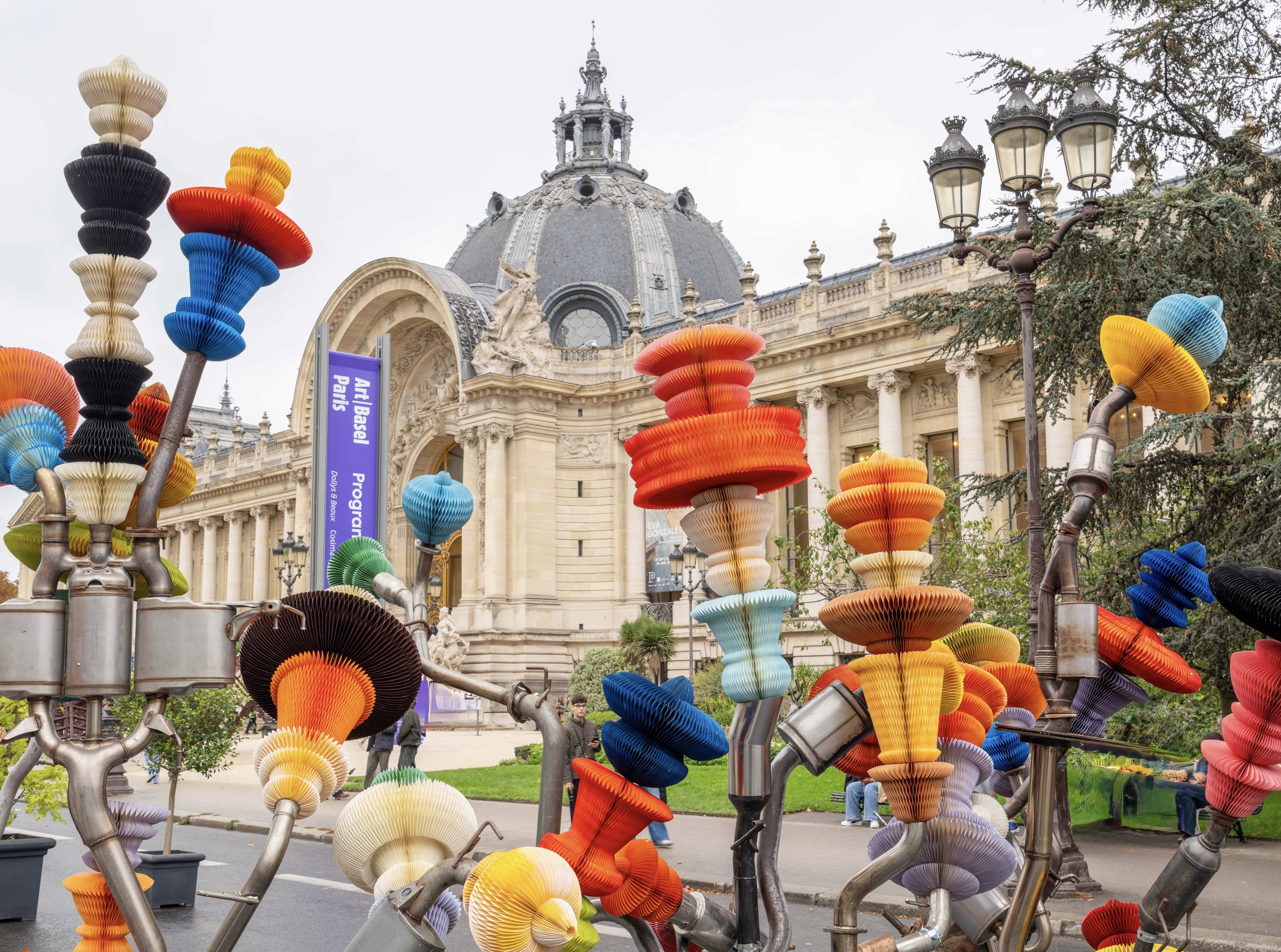
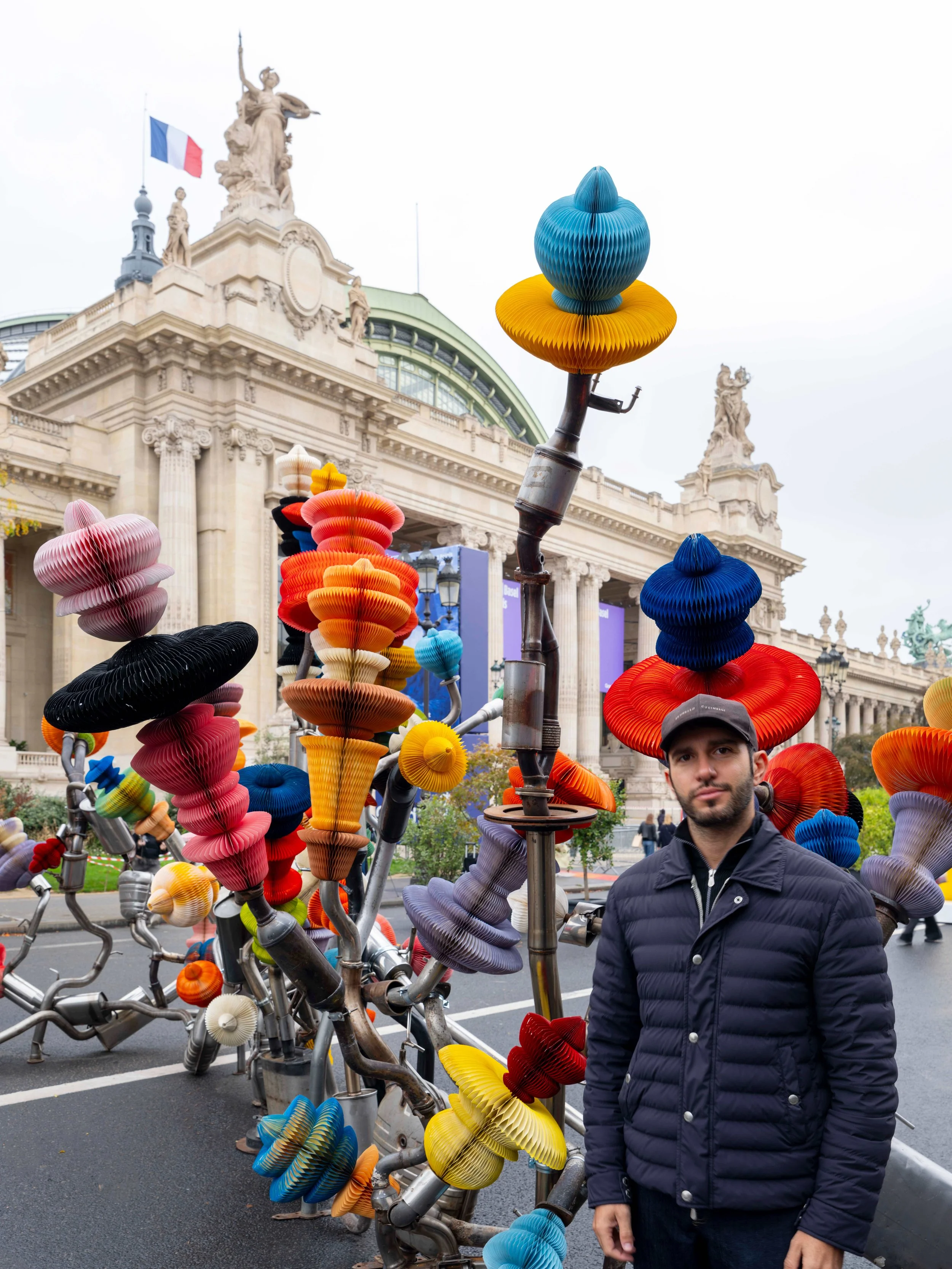
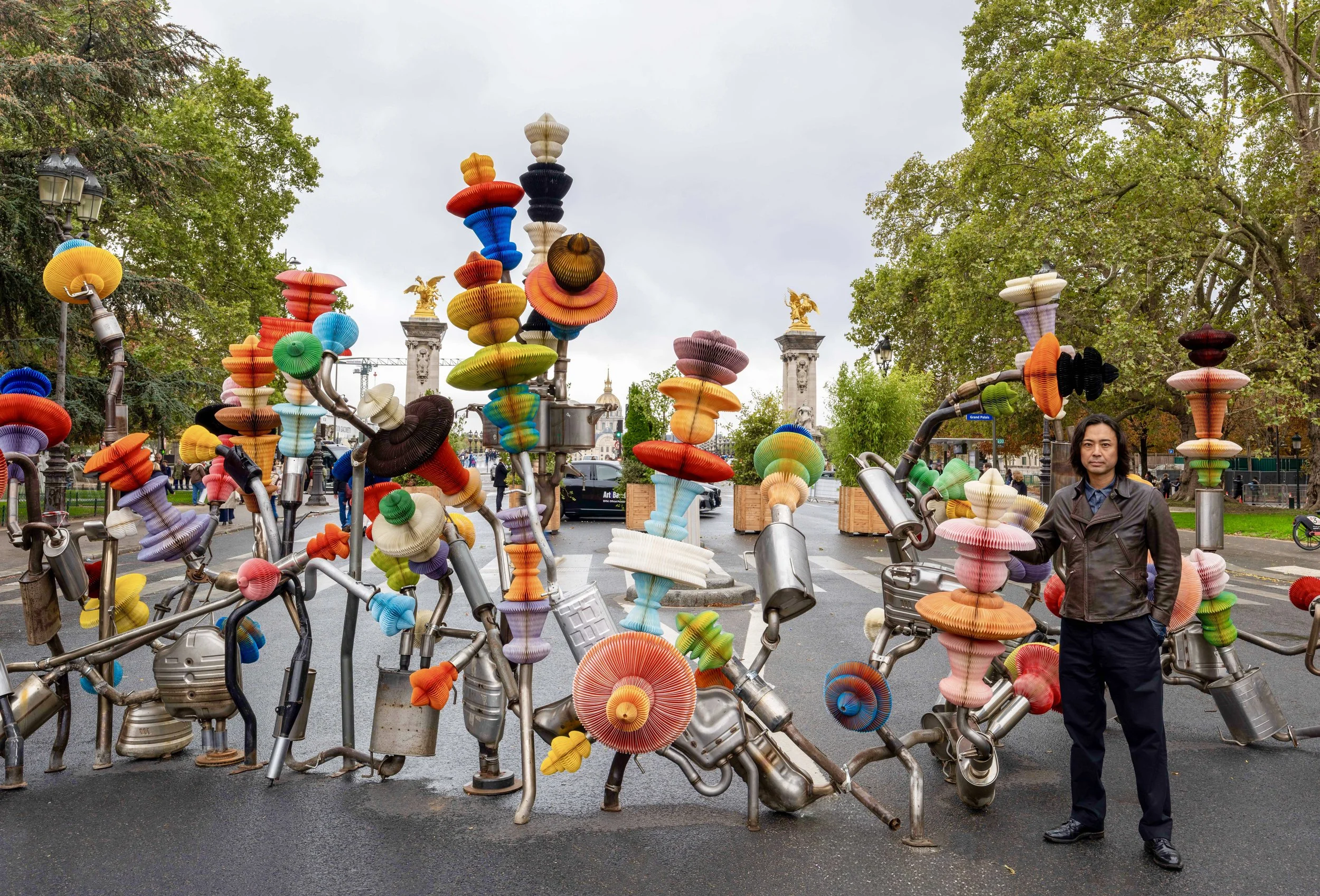
Gallery Rosenfeld is pleased to announce the presentation of the monumental sculpture A Symbiotic Form (2026) by Keita Miyazaki on Avenue Winston Churchill, between the Grand Palais and the Petit Palais.
Keita Miyazaki’s artistic practice explores the relationship between destruction and rebirth, industrial material and the natural world, bringing Japanese aesthetic sensibilities into dialogue with the contradictions of contemporary society. By utilizing automotive components recovered following the 2011 Fukushima tsunami, the artist transforms waste materials into complex, organic sculptural forms that evoke flowers, branches, and evolving organisms. Objects that once belonged to the realm of industrial production are thus granted a new life, revealing the potential to generate beauty from the very traces of destruction.
The floral compositions that define his work draw inspiration from ikebana—the ancient Japanese art of flower arrangement—which is rooted in a balance between form, line, space, and emptiness. As in ikebana, every element is positioned with precise compositional harmony, where the relationship between the parts is as significant as the individual components themselves. This sensibility is intertwined with the Japanese aesthetic concept of wabi-sabi, which finds beauty in imperfection, irregularity, and the transience of things. In Miyazaki’s sculptures, materials marked by time and delicate structures coexist in an unexpected equilibrium, suggesting that fragility is not necessarily a weakness, but can instead become a form of strength and regeneration. Over the past few years, A Symbiotic Form has traversed diverse historical and cultural contexts, establishing a constantly evolving dialogue with the sites that have hosted it—from an Imperial Garden in Japan to the Renaissance nymphaeum at the National Etruscan Museum of Villa Giulia in Rome, and the gardens of Palazzo Tozzoni in Imola. In 2026, this journey continued in Venice with From Water to Form, presented on the island of Giudecca alongside an exhibition at the Museum of Oriental Art at Ca’ Pesaro, coinciding with the 61st Venice Biennale. These stages have deepened the exploration of the relationship between water, cultural memory, and transformation, broadening the artist’s reflection on the interplay between nature, history, and human intervention.
In each of these settings, Miyazaki’s works bridge the past and the present, the artificial and the natural, permanence and change. Their presence transforms industrial materials into forms that appear to belong to the cycles of life, inviting a reconsideration of the meaning of waste—and the potential for a new existence for objects that might otherwise seem worn out or incomplete.
The presentation in Paris marks a further chapter in this trajectory, bringing Miyazaki’s research into the public sphere and integrating it into the city’s monumental landscape. Bridging historical architecture with a contemporary sensibility, A Symbiotic Form offers a vision in which beauty emerges from the encounter between seemingly irreconcilable elements—a vision where imperfection becomes a starting point for imagining new forms of harmony.
