Riccardo Guarneri in dialogo con Rembrandt van Rijn - Galleria Albani - Musei Civici Urbino
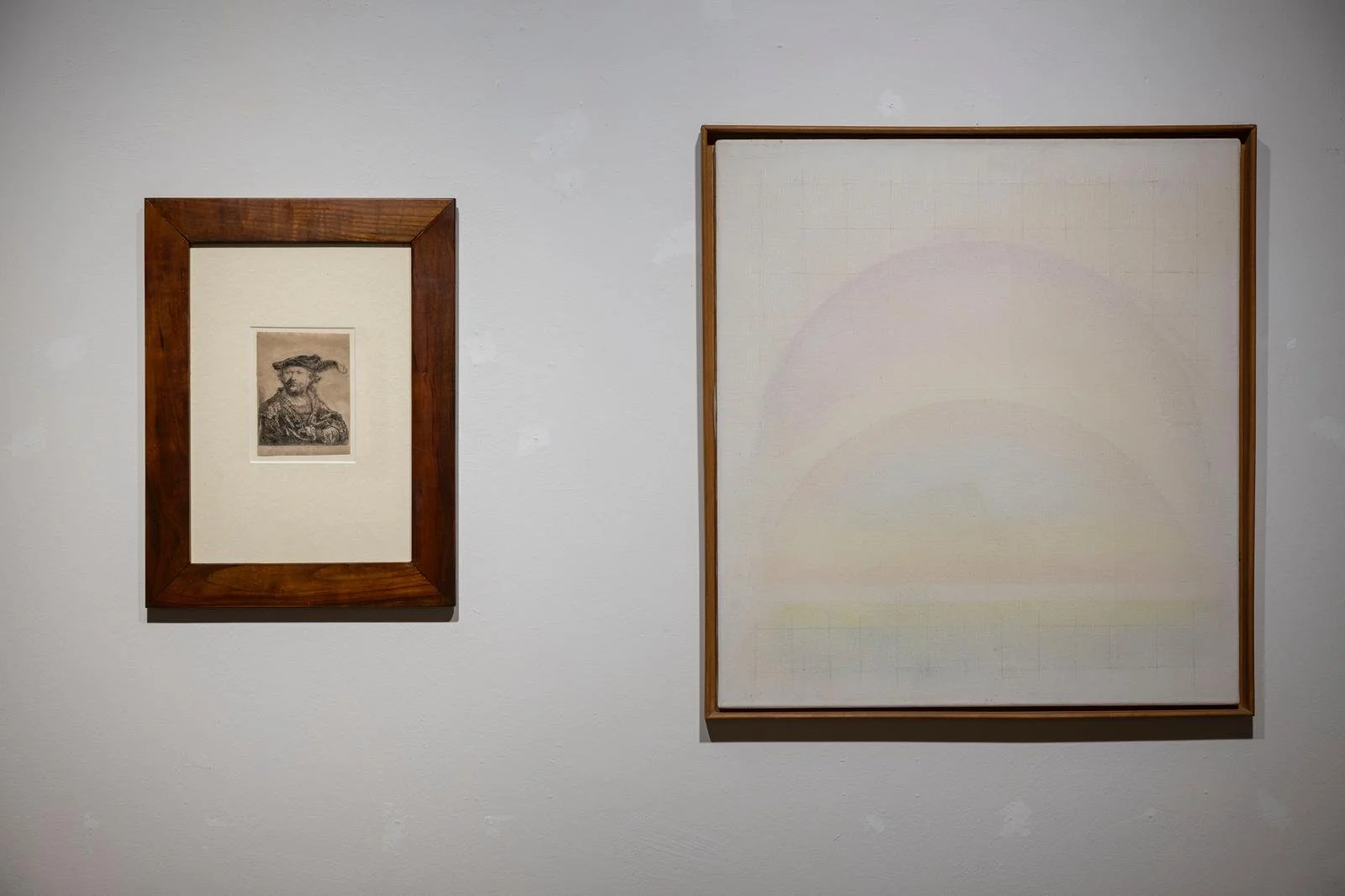
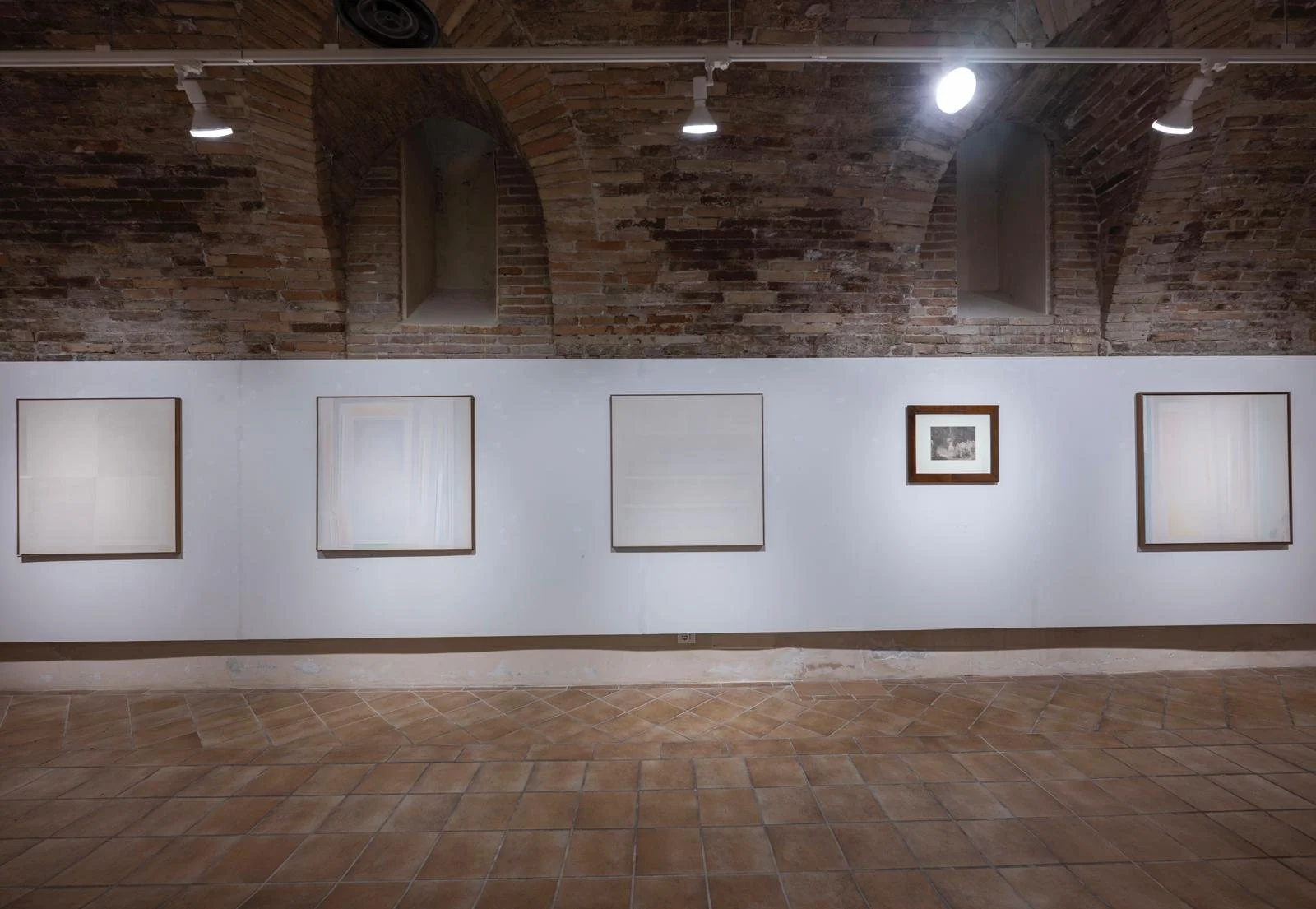
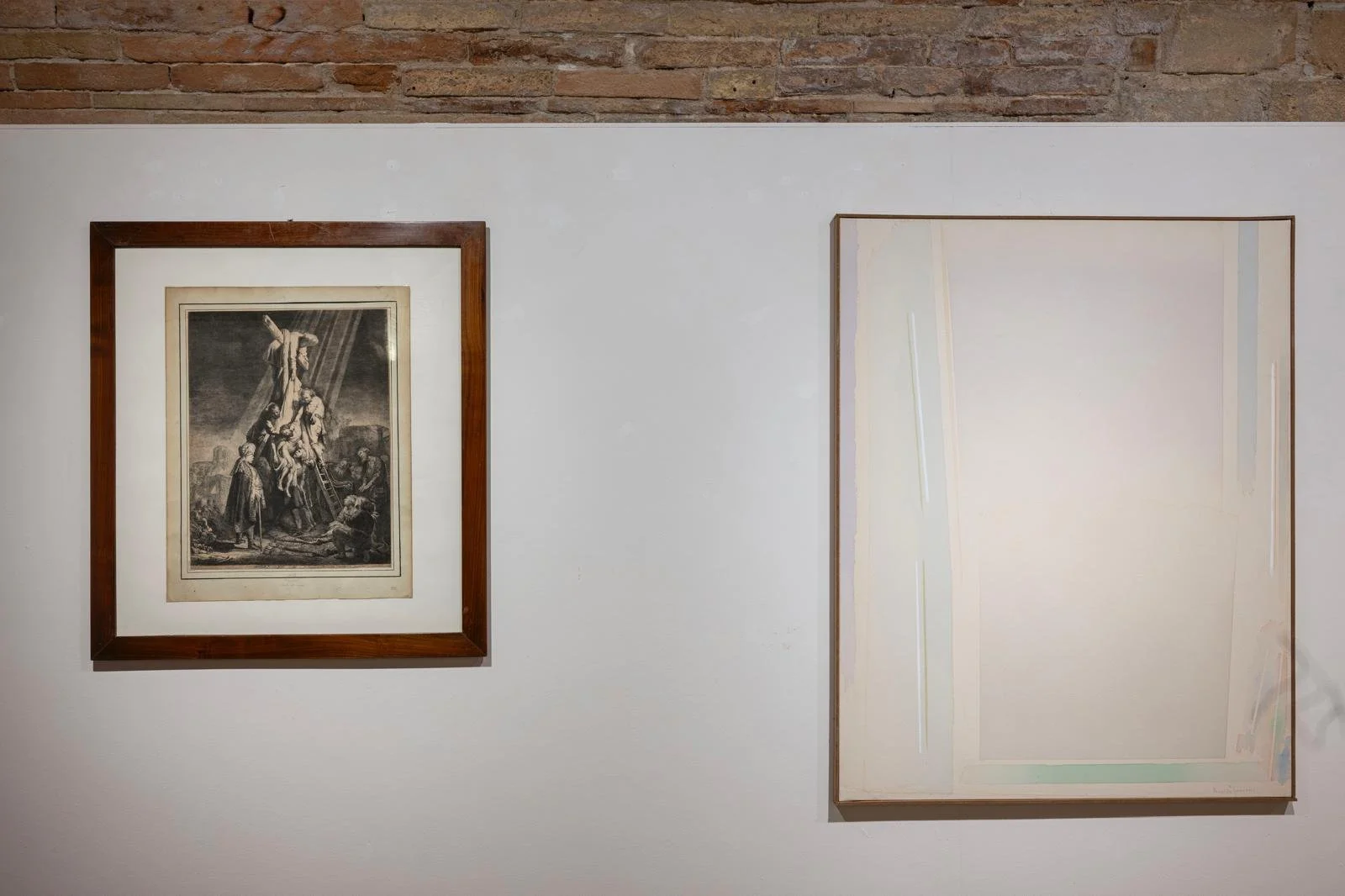
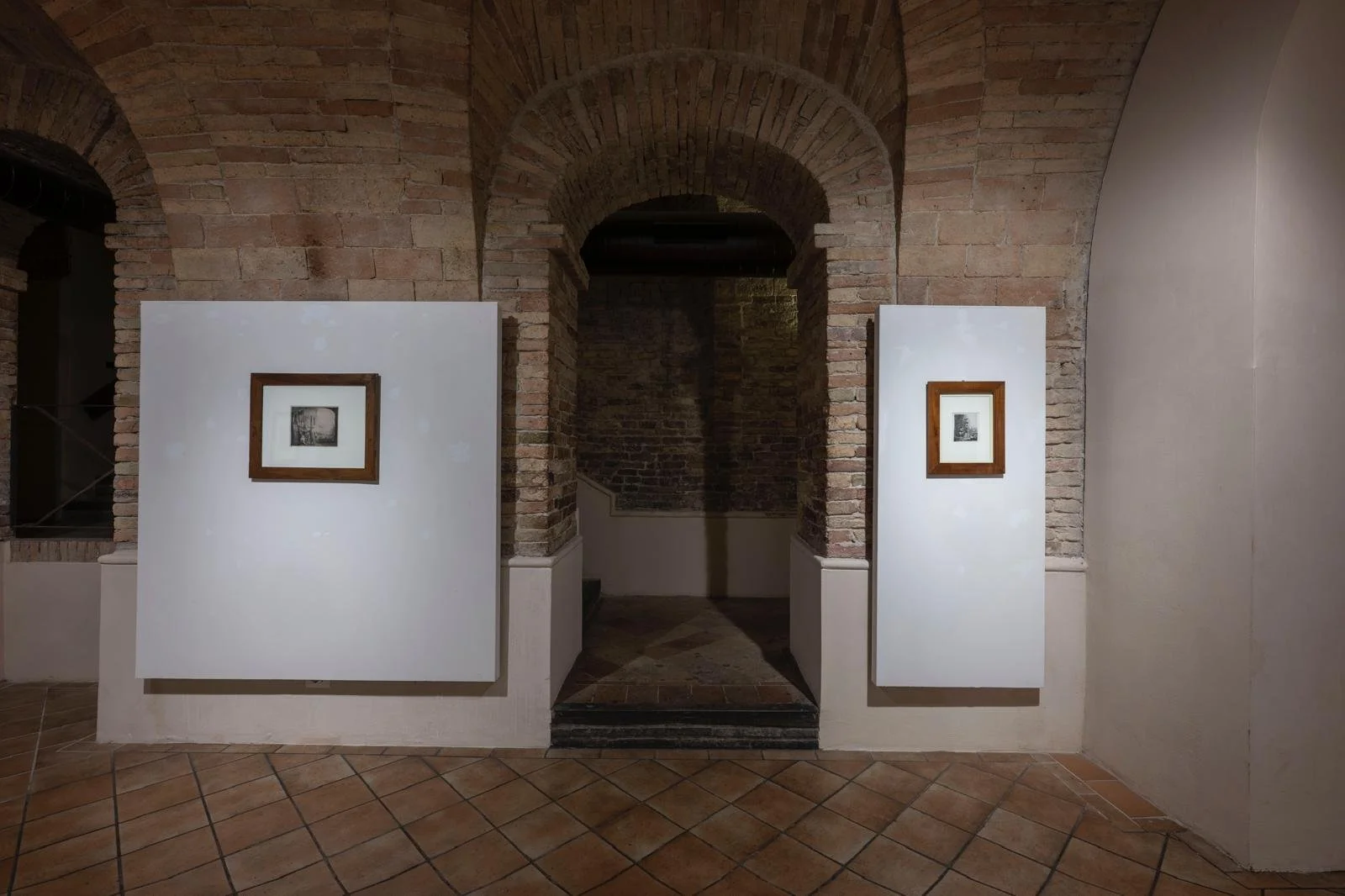
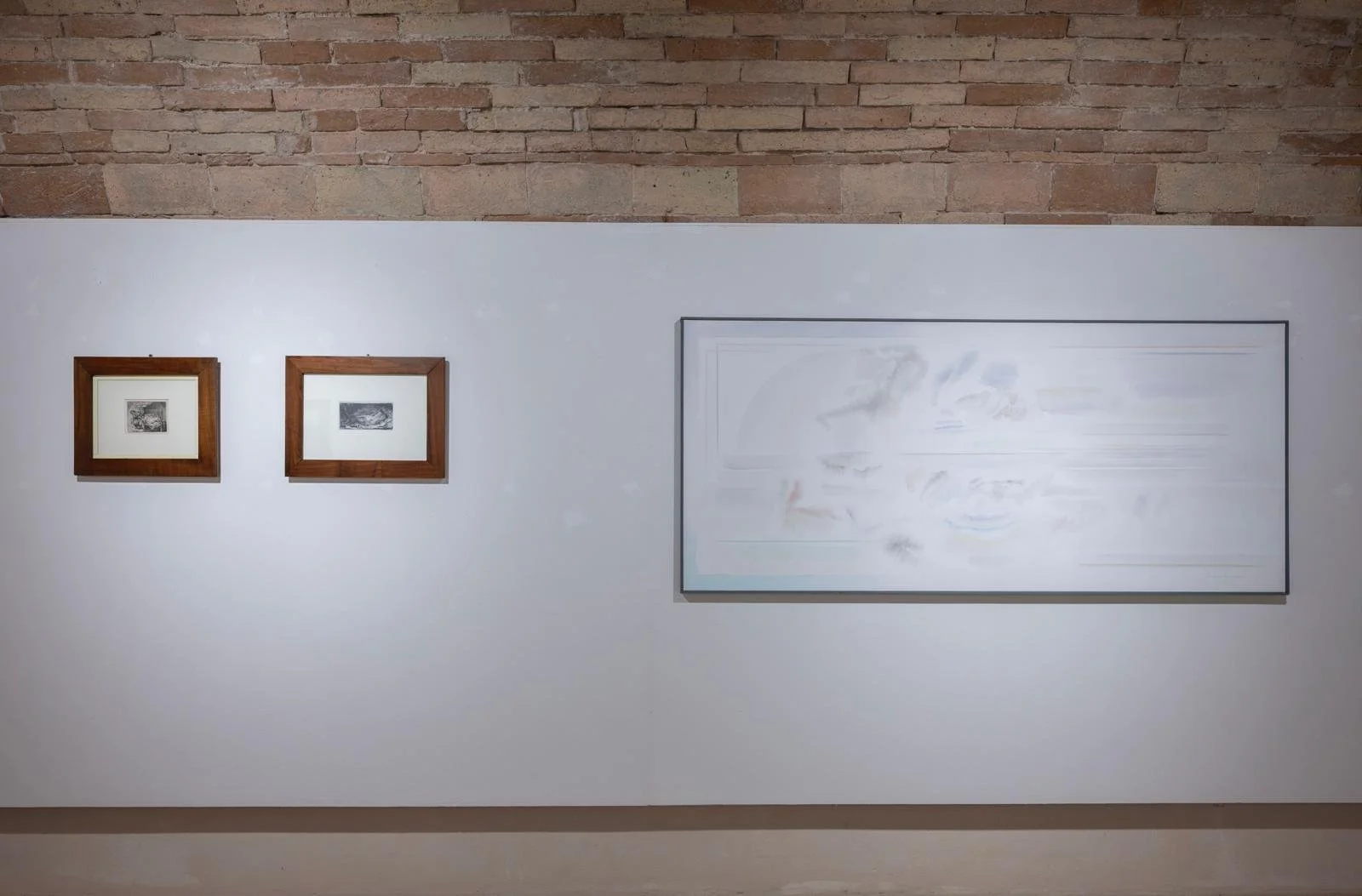
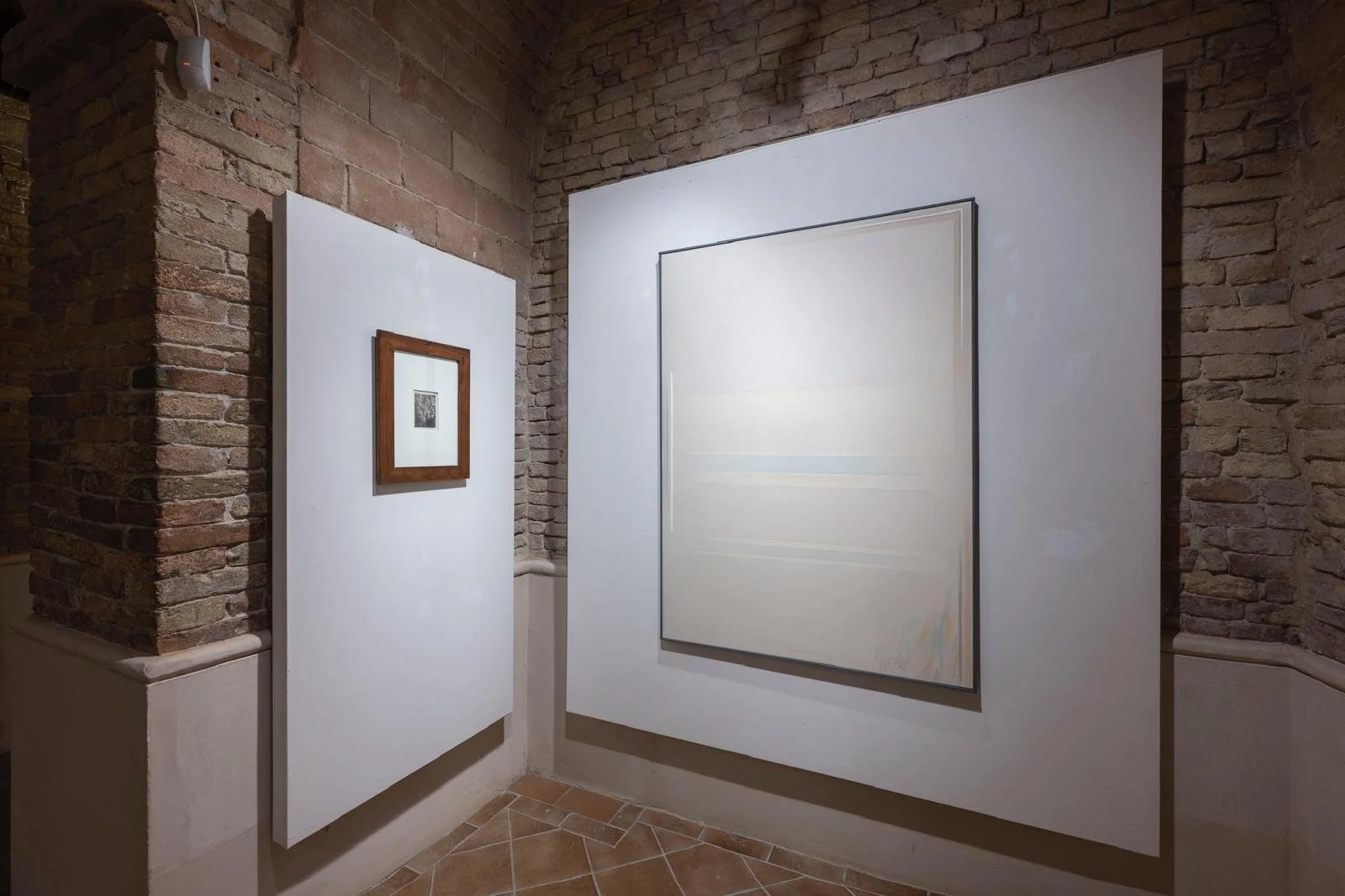
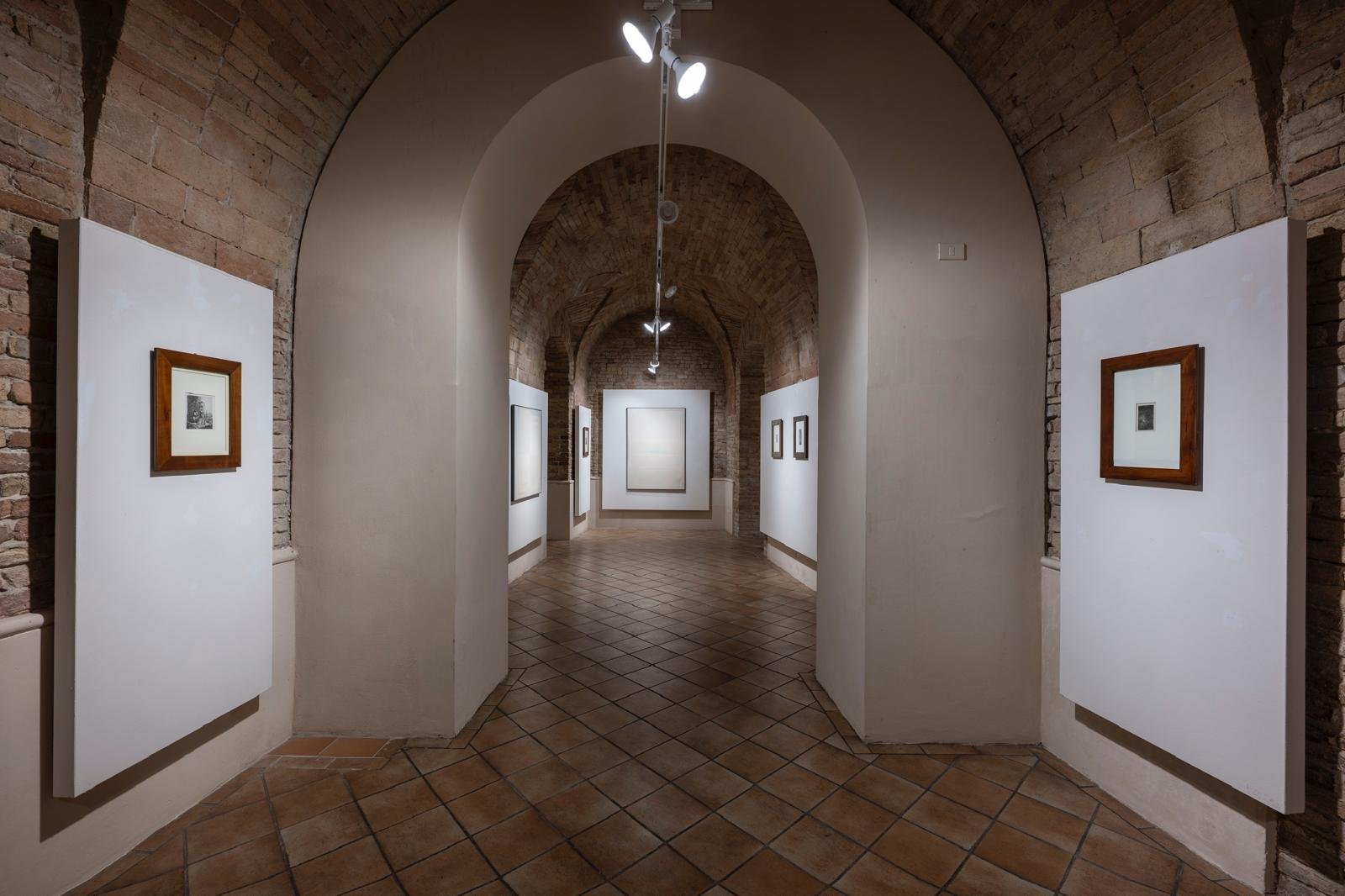
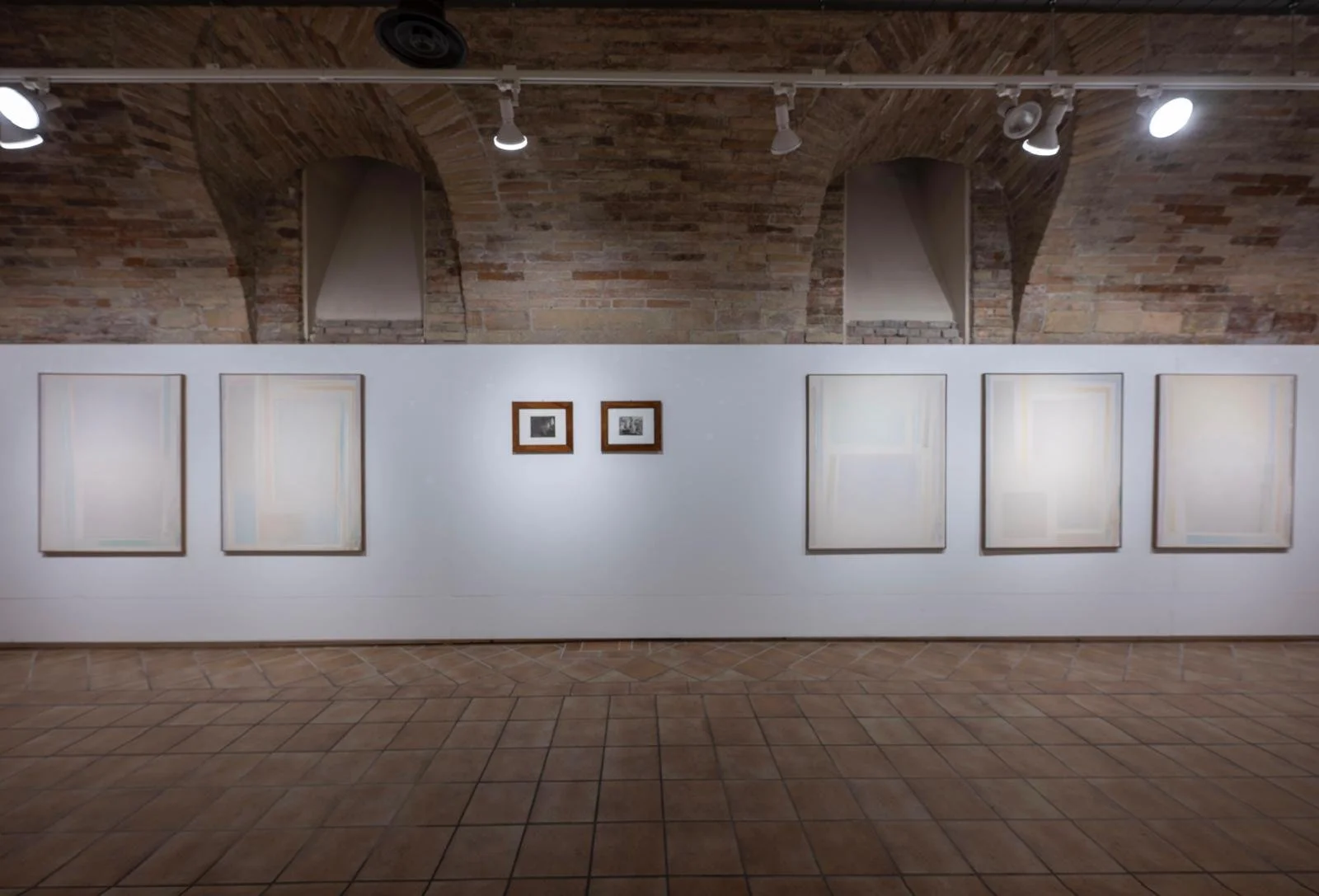
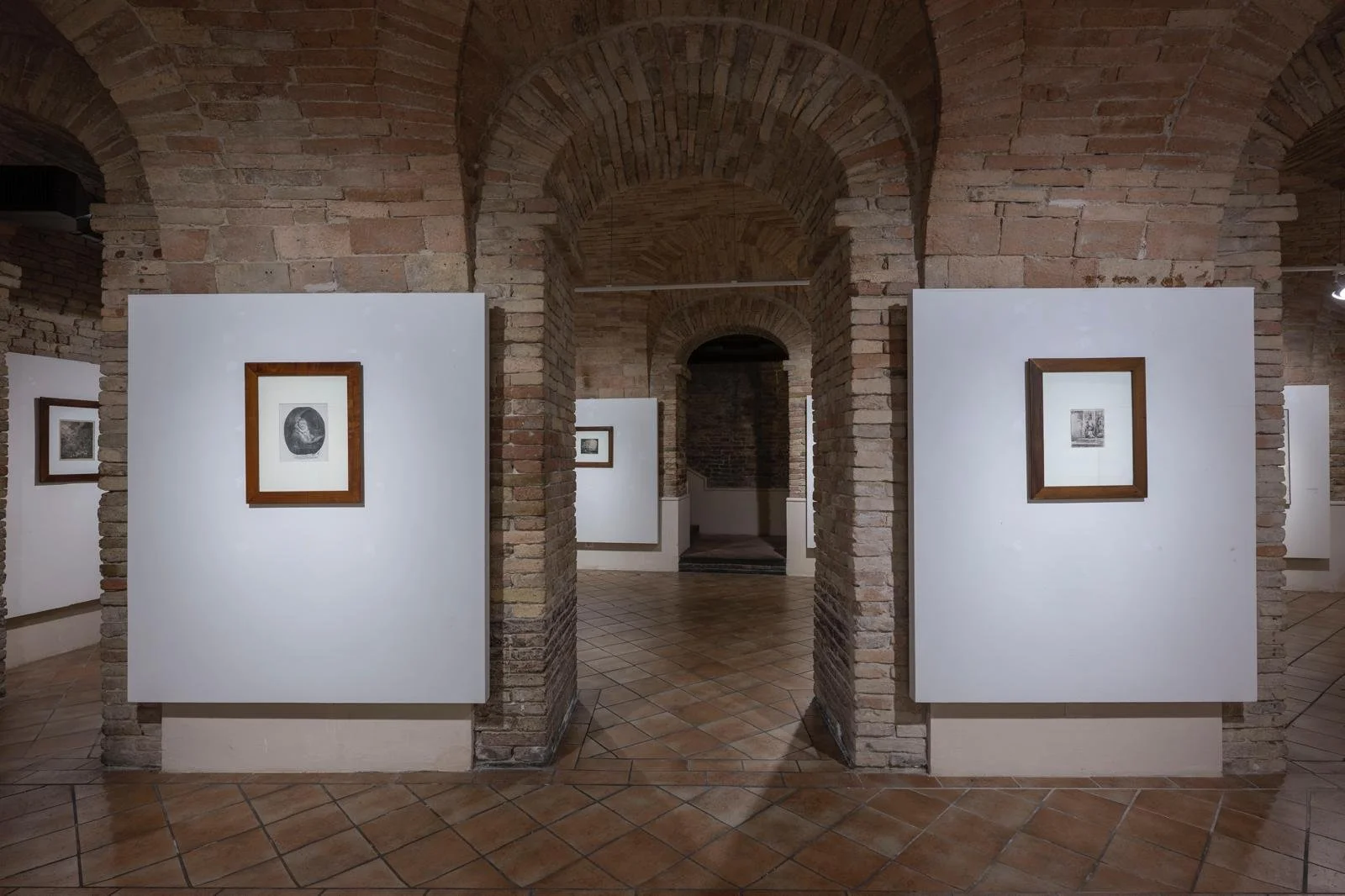
Luce che Affiora: Riccardo Guarneri in dialogo con Rembrandt van Rijn
Curated by Riccardo Freddo and Luca Baroni
Urbino, Galleria Albani – Musei Civici di Urbino
Via Giuseppe Mazzini, 7, 61029 Urbino PU, Italy
20 December 2025 – 25 January 2026
Organized by the Municipality of Urbino in collaboration with Rete Museale Marche Nord and Gallery Rosenfeld – London, Luce che Affiora presents a remarkable dialogue across time between the works of Riccardo Guarneri and the masterful prints of Rembrandt van Rijn.
The Exhibition
The exhibition traces an encounter that began decades ago: in the late 1950s, during a brief stay in the Netherlands for his musical career, the young Riccardo Guarneri visited a major exhibition of Rembrandt’s late works. Before those paintings, where light emerges from shadow, Guarneri experienced a revelation. The luminous openings rising from the darkness appeared to him as a passage, a radiant wound, a point where painting itself becomes breath. That vision ignited his lifelong journey into painting — the conceptual core of this exhibition.
For the first time in Urbino, Luce che Affiora brings these two universes into dialogue. On one side, Guarneri’s works from the 1960s to the present, bearing witness to a coherent and rigorous exploration of light, line, and transparency. On the other, a selection of original Rembrandt prints, exemplifying the master of chiaroscuro, whose use of light conveys both dramatic intensity and spiritual depth.
Guarneri’s works are presented from his personal collection, facilitated by Gallery Rosenfeld in London, while the Rembrandt prints come from a prestigious private collection in the Urbino region, long committed to promoting both ancient and contemporary printmaking locally and internationally.
Curated by Riccardo Freddo (Rosenfeld Gallery) and Luca Baroni (Rete Museale Marche Nord), the exhibition juxtaposes the two artists as distinct yet harmonized voices within the same visual score. Rembrandt works in the depth of shadow, letting light emerge as a human revelation. Guarneri operates on the threshold of the almost invisible: compositions built on subtle asymmetries, imperceptible variations, and areas that seem to dissolve into air. The dialogue is not stylistic but philosophical — both artists use light as a language of the interior.
Standing before Guarneri’s canvases, one experiences light as if it emerges from silence, a faint note that resonates and gradually expands across space. It does not overwhelm but insinuates itself, perceived more as sensation than vision, like a distant sound returning to memory.
Rembrandt, a cornerstone of European art, constructs an inner theater with light. His prints convey the density of existence, the dramatic weight of faces, and the emotional impact of light that strikes, reveals, and redeems. In dialogue with Guarneri, Rembrandt’s prints articulate the profound voice of human depth against the Florentine painter’s subtle analytical levity. Two approaches interrogating the same mystery.
In an era dominated by rapid imagery and immediate perception, the juxtaposition of Guarneri and Rembrandt invites a rediscovery of contemplative viewing and the importance of interiority. Both offer a vision simultaneously intimate and universal. Luce che Affiora encourages visitors to pause, engage with light not merely as visual data but as a form of thought — a return to depth in a world demanding quick answers, presented in a city at the cradle of Renaissance humanism.
About Riccardo Guarneri
Born in Florence in 1933, Riccardo Guarneri began painting in the 1950s alongside a vibrant musical career, performing across Italy and abroad. His early figurative work evolved toward Informalism, profoundly shaped by the encounter with Rembrandt’s late self-portraits in The Hague (1958–59), which revealed the power of light and transparency over materiality. Influences from Licini, Klee, and the Cobra group emerged alongside this revelation but were gradually considered too instinctive for his approach.
Guarneri’s career accelerated with early exhibitions in The Hague, Florence, and Genoa (1960–62), marking a decisive shift toward color as light and a visual perception-focused practice, leaving Informalism behind. His first works emphasizing subtle variations and pencil-treated surfaces were shown in 1963 at the Strozzina, Palazzo Strozzi, the same year he co-founded Gruppo Tempo 3, advancing abstract language beyond the dialectic of Concretism and Informalism.
From 1964, Guarneri developed a more structured approach: slightly asymmetrical diamonds and squares organize the space rhythmically, while color as light replaces all tonal components. This lyrical, existential sensitivity guided his participation in major exhibitions, including the Venice Biennale (1966), Kunsthalle Bern, and the Paris Biennale (1967), alongside numerous solo shows across Italy and Europe.
In the late 1960s and 1970s, his painting further distilled into near-white canvases, perceptible only with prolonged attention, emphasizing transparency and delicate gestures. Major retrospectives, including at Kunstverein Münster (1972) and Palazzo Pitti (2004), traced his analytical approach, while critical attention intensified in the new millennium. Highlights include the mosaic for Rome’s Lucio Sestio station (2000) and the acquisition of works by the Centre Pompidou, Paris (2021). Guarneri has taught at the Academies of Carrara, Bari, Venice, and Florence and is an Emeritus Academic of the Accademia delle Arti del Disegno. He lives and works in Florence.